Why Your Marketing Brief Keeps Failing (And How AI Can Fix It)
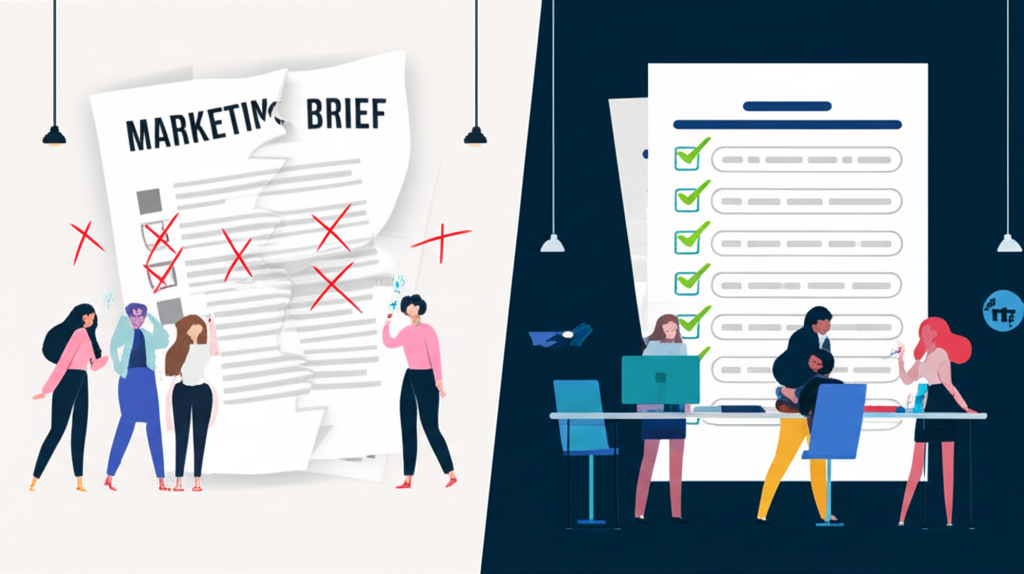
Mark spent three weeks crafting what he thought was the perfect marketing brief. Detailed target audience. Clear objectives. Comprehensive brand guidelines. Two months and $75K later, the campaign was a complete failure.
The creative team missed the core message. The media team targeted the wrong demographic. The content felt disconnected from the brand. Everyone worked hard, but they were working toward different goals.
Sound familiar? You're not alone. Research shows 73% of marketing campaigns fail, and the root cause isn't bad creative or poor media planning—it's the brief.
The Anatomy of Brief Failure
Most marketing briefs fail in predictable ways:
The Research Gap: Briefs are written without incorporating actual market research, relying instead on assumptions and outdated personas.
Strategy-Execution Disconnect: The brief reads beautifully but provides no practical guidance for creative development or media planning.
Context Amnesia: By the time execution begins, crucial context from the research phase has been lost or oversimplified.
One-and-Done Mentality: Briefs are treated as static documents instead of living strategy guides that evolve with campaign insights.
The Hidden Cost of Bad Briefs
Poor briefs don't just waste money—they waste opportunity. Consider:
- Time Loss: Teams spend 40% more time on revision cycles when briefs are unclear
- Creative Frustration: Designers and copywriters make educated guesses instead of strategic decisions
- Campaign Misalignment: Different teams interpret vague briefs differently, creating inconsistent execution
- Missed Insights: Without proper research integration, campaigns ignore market opportunities
The average company wastes $2.3M annually on campaigns that fail due to poor strategic foundation.
How AI Changes Everything
AI-powered briefing doesn't just make briefs faster—it makes them fundamentally better by:
Research Integration: Instead of summarizing research in bullet points, AI weaves insights throughout strategy recommendations. Every tactical suggestion connects back to market intelligence.
Comprehensive Coverage: AI ensures no critical elements are missed by checking briefs against frameworks proven to drive results.
Dynamic Intelligence: As campaigns run and data comes in, AI updates strategic guidance in real-time rather than waiting for post-campaign analysis.
Context Preservation: AI maintains the full context of research, strategy discussions, and decision rationale throughout execution.
Case Study: Before and After AI Briefing
Traditional Brief (Failed Campaign):
- Objective: "Increase brand awareness"
- Target: "Health-conscious consumers 25-45"
- Message: "Premium quality ingredients"
- Success Metrics: "Improved brand metrics"
Result: 14% below benchmark performance, unclear ROI, team confusion.
AI-Powered Brief (Same Brand):
- Objective: "Drive 25% increase in trial among fitness enthusiasts who currently use competitor protein bars, leveraging their dissatisfaction with artificial ingredients"
- Target: "CrossFit and boutique fitness participants (26-38, HHI $75K+) in metro markets, specifically those who've purchased Quest or RXBAR in past 6 months but express ingredient concerns in reviews"
- Message: "Finally, clean energy that tastes like real food—because your performance shouldn't depend on artificial anything"
- Success Metrics: "15% trial rate among target segment, 60%+ purchase intent lift, 8:1 ROAS minimum"
Result: 34% above benchmark, clear attribution, team alignment from day one.
The AI Brief Framework
AI-powered briefs follow a proven structure that connects research to results:
- Market Context: What's happening in the category right now?
- Consumer Truth: What does our target really think and feel?
- Strategic Opportunity: Where can we win based on real insights?
- Tactical Translation: How does strategy become executable creative?
- Success Definition: What specific outcomes prove we're winning?
Each element builds on research and provides clear guidance for execution teams.
Your Brief Health Check
Review your last three campaign briefs against these questions:
- Does the brief cite specific market research findings?
- Can creative teams extract clear direction without interpretation?
- Are success metrics connected to business impact?
- Would someone reading this brief six months later understand the strategic reasoning?
If you answered "no" to any of these, your briefs are likely undermining your campaigns.
The Future of Strategic Planning
The best marketers aren't those who write the most creative briefs—they're those who connect market intelligence to executable strategy most effectively. AI makes that connection automatic, comprehensive, and continuously optimized.
Ready to see how intelligent briefing transforms your campaigns? Audit your current brief process with PowerAI Studio.